XPAD is now previewing on MakerWorld Crowdfunding. Interested in the concept? Follow the project →

Build the layout from idea to hardware

The homepage now mirrors the actual XPAD flow: layout, mapping, calibration and printable parts.
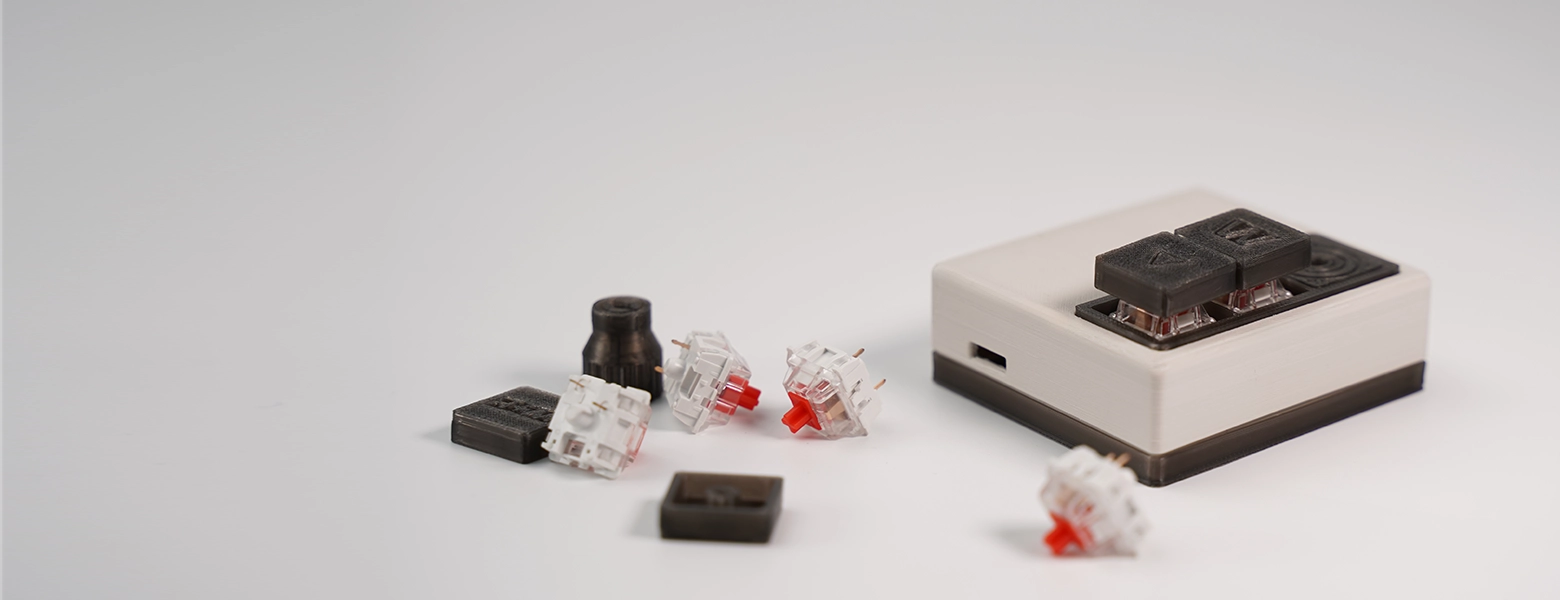
XTIA X-PAD demo
01

Design layout

Load a preset or define the layout, modules and key functions, then write to the controller.

02

Generate parts

Create printable shell and keycap files from the selected layout.

03

Optional tuning

Hall-effect calibration, second-stage keycap design, and Small Deck tools.

04

Maintain

Reconnect later to read the saved configuration and adjust module behavior.

05

Extend

Flash GP2040-CE for gamepad use, or build custom features on the open firmware.

Pick a starting point

Built-for-purpose presets — start from one and make it yours in the configurator.

See the technical details of each preset in the Wiki →

Rhythm hall keyboard

Up to four independent hall-effect keys, with precise actuation and Rapid Trigger.

Use this preset →

Office numpad

All switch modules configured as a compact pad for frequent numeric input.

Use this preset →

AI assistant pad

Onboard mic for close-range PC voice input; hotkeys fire your common prompts and macros. Open and customizable.

Use this preset →

Software shortcut hub

Shortcut and macro controls for professional software workflows.

Use this preset →

Under the hood

The technical bits that make it flexible.

Parametric keyboard parts generator

Automatically generates printable keyboard shells, keycaps and internal structures from selected layout parameters.

Modular inputs

Supports magnetic switches, MX switches, rotary encoders and microphone modules.

Browser-based tools

Configure layouts, calibrate magnetic switches, and generate printable files in the browser.

Multiple firmwares

Runs GP2040-CE pro gamepad firmware and the fully open-source XPAD-NEO firmware.

Macros & combos

Multi-key sequences, modifier combos and repeats — all from a single key.

Development-ready hardware

Exposed pins and documented mappings support firmware and hardware extension.